
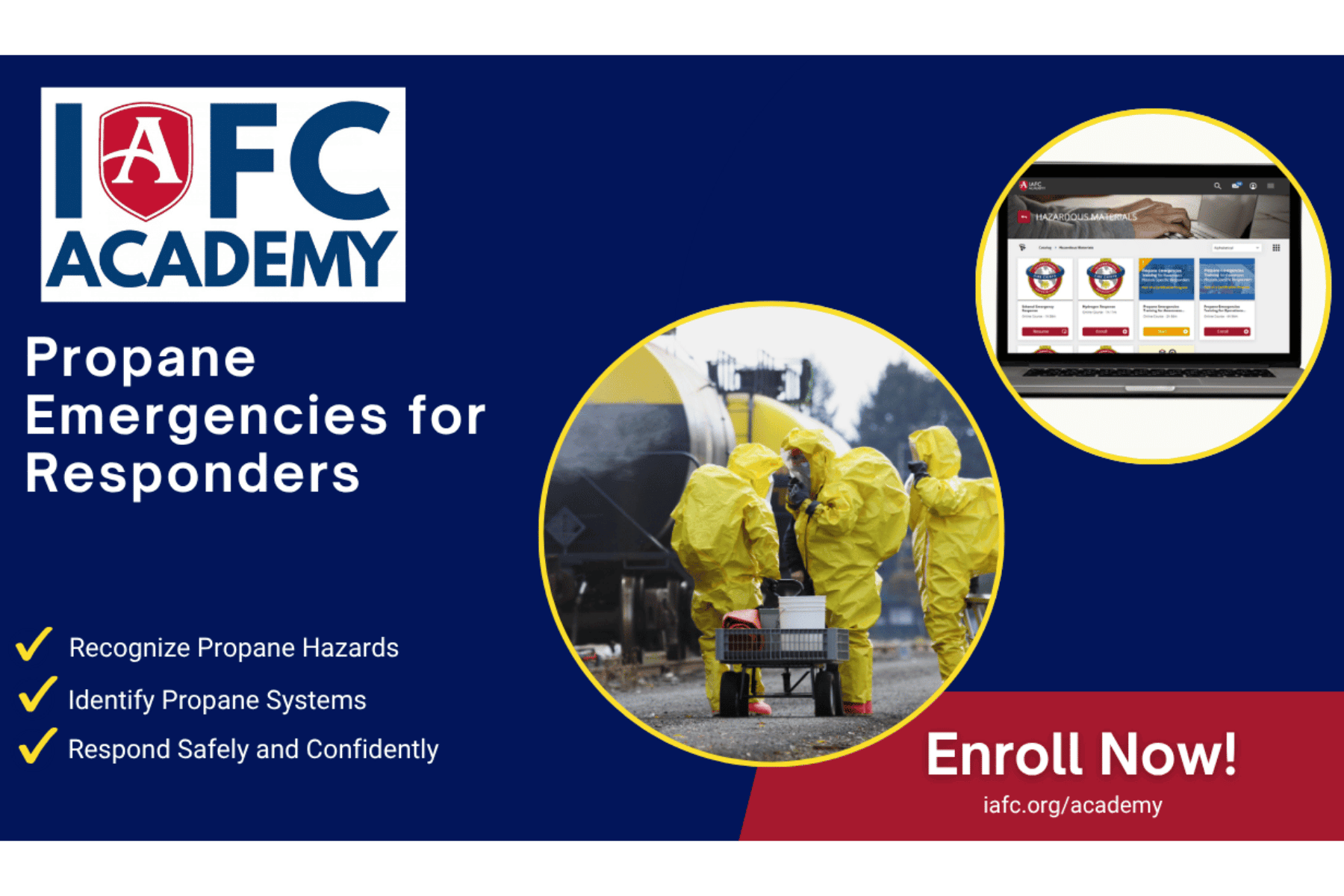
Build the foundational knowledge needed to recognize propane hazards and respond safely within an awareness-level role.
This three-module course introduces propane properties and hazards, regulations and container components, and the operational principles responders need when encountering a propane emergency. Through practical instruction and incident-based learning, participants will strengthen their ability to recognize hazardous conditions, anticipate changing risks, and take appropriate actions to protect responders and the public.
Module 1: Propane Fundamentals for Propane Emergencies
Build a foundational understanding of propane, how it behaves, and the hazards it can create. This module focuses on recognizing hazardous conditions, anticipating how conditions may change, and maintaining responder safety while trained personnel are notified.
Learning Objectives
- Recognize key propane behaviors and how they create hazardous conditions.
- Identify conditions that increase risk.
- Distinguish between inherent hazards and changing risks.
Module 2: Propane Regulations and Components
Learn how propane is regulated and how to recognize propane systems in the field. This module covers markings and labels, common container types and components, and the bulk transportation and storage environments responders may encounter.
Learning Objectives
- Explain why propane systems are governed by codes and standards.
- Distinguish between standards-setting organizations and regulatory agencies.
- Recognize indicators that propane may be present and understand what they communicate.
- Identify common container components, container categories, and bulk transportation and storage environments.
Module 3: Awareness Response Framework
Apply awareness-level concepts to propane incidents and answer a critical question: What should I recognize and do when I arrive at a propane incident within my role and authority?
This module connects incident management, hazard recognition, responder safety, and public protective actions through an applied propane incident scenario.
Learning Objectives
- Explain how NIMS and ICS support safe, coordinated propane incident response.
- Describe the awareness-level role within the Eight Step incident management process.
- Recognize conditions that require withdrawal, escalation, or public protective actions.
- Apply awareness-level response principles during a propane incident scenario.
Resources
- Emergency Response Guidebook 2020 Updates (video)
The first video in a three-part series on the 2020 Emergency Response Guidebook (ERG). This video covers the latest updates and new information in the 2020 ERG.

- How to use the 2020 Emergency Response Guidebook (video)
The second video in a three-part series on the 2020 Emergency Response Guidebook (ERG). This video covers the basics of how to use the 2020 ERG—the go-to manual for first responders needing to identify specific hazmat risks, steps to protect themselves, and procedures for containing the incident as quickly and safely as possible.

- 2020 Emergency Response Guidebook: Notification Sequence and Requests for Technical Information (video)
The final video in a three-part series on the 2020 Emergency Guidebook (ERG). This video discusses steps to access relevant information outside of the ERG.
