The IAFC Terrorism & Homeland Security Committee provides strategic leadership on terrorism, homeland security, and emerging threats affecting the fire and emergency service.
Comprised of fire and emergency service leaders and subject-matter experts, the committee helps ensure departments have the information, resources, partnerships, and policies needed to prevent, prepare for, respond to, and recover from complex threats and incidents.
The committee also represents the fire service perspective with federal agencies, policymakers, and national homeland security partners.
Core Responsibilities
Monitor Emerging Threats
Identify evolving homeland security risks and trends, including terrorism, complex coordinated attacks, cybersecurity threats, active shooter incidents, and emerging technologies.
Advise on Policy & Legislation
Provide the IAFC and policymakers with fire service expertise on federal legislation, policies, guidance, and national homeland security priorities.
Strengthen National Partnerships
Build relationships among the fire service, government agencies, homeland security organizations, and other public safety partners.
Advance Information Sharing
Promote the integration of the fire and emergency service into national intelligence and information-sharing efforts.
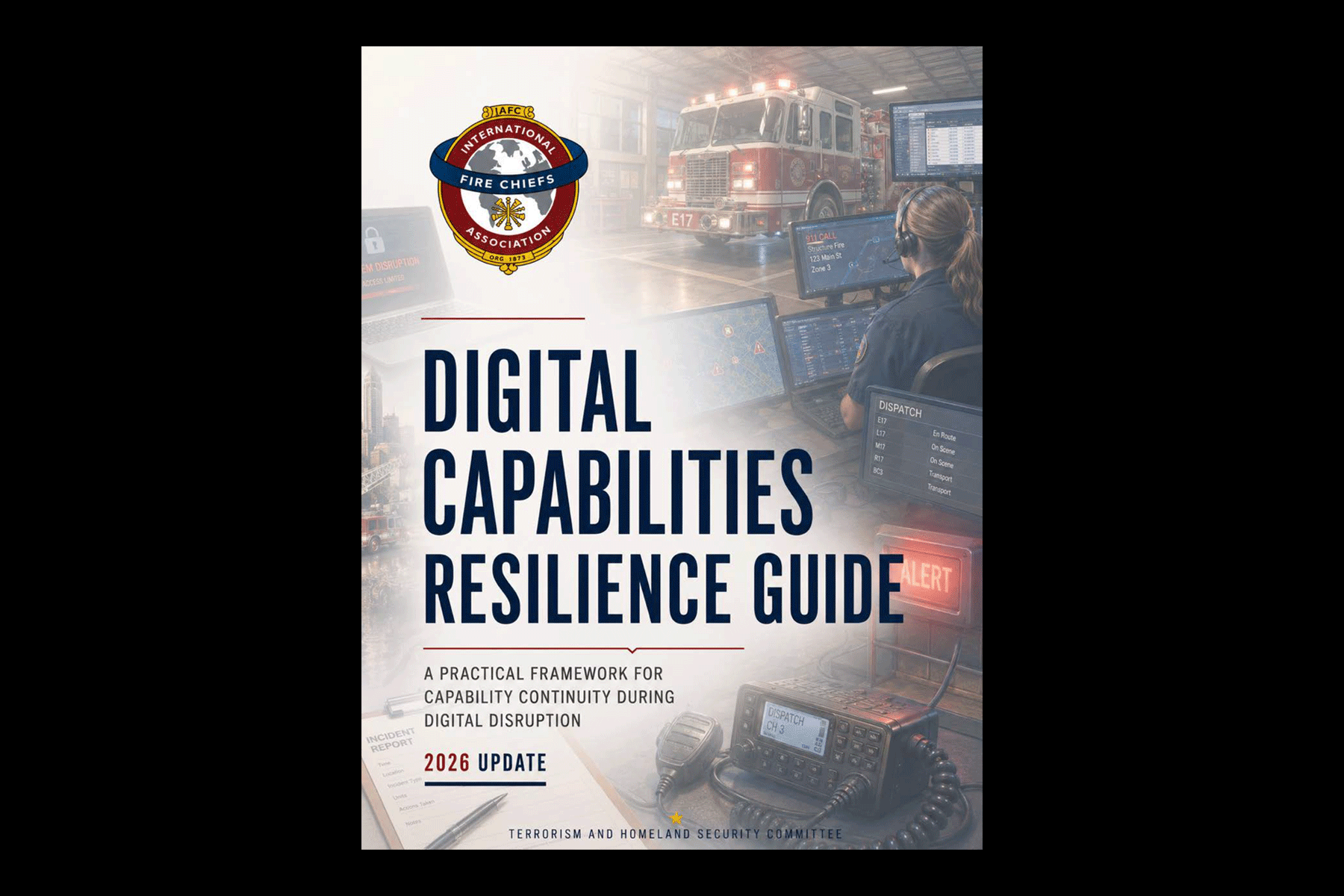
Develop Resources & Guidance
Create and share tools, guidance, and strategic resources that help departments strengthen preparedness and address evolving threats.
Represent the Fire Service
Contribute fire and emergency service expertise to federal and national working groups addressing terrorism and homeland security.
Preparing the Fire Service for Emerging Threats
The threats facing communities and first responders continue to evolve. The committee works to ensure fire and emergency service leaders are prepared to address both traditional and emerging homeland security challenges.
Through policy leadership, information sharing, partnerships, and practical resources, the committee helps departments strengthen operational readiness, responder safety, interagency coordination, and community resilience.
Collaboration Across the Fire Service
Many homeland security challenges cross traditional emergency-response disciplines. The committee collaborates with other IAFC committees, including Emergency Management, Hazardous Materials, and Wildland Fire Policy, to address complex and interconnected threats.
This coordinated approach helps ensure the fire service is represented in national preparedness efforts and better equipped to respond when communities face large-scale or evolving emergencies.
Resources
The Terrorism & Homeland Security Committee develops and shares resources to help IAFC members and the broader fire and emergency service mitigate, prepare for, respond to, and recover from terrorism and homeland security incidents.