New guide educates policymakers on the importance of firefighter physicals, and their critical role in advancing firefighter health, wellness, and safety.
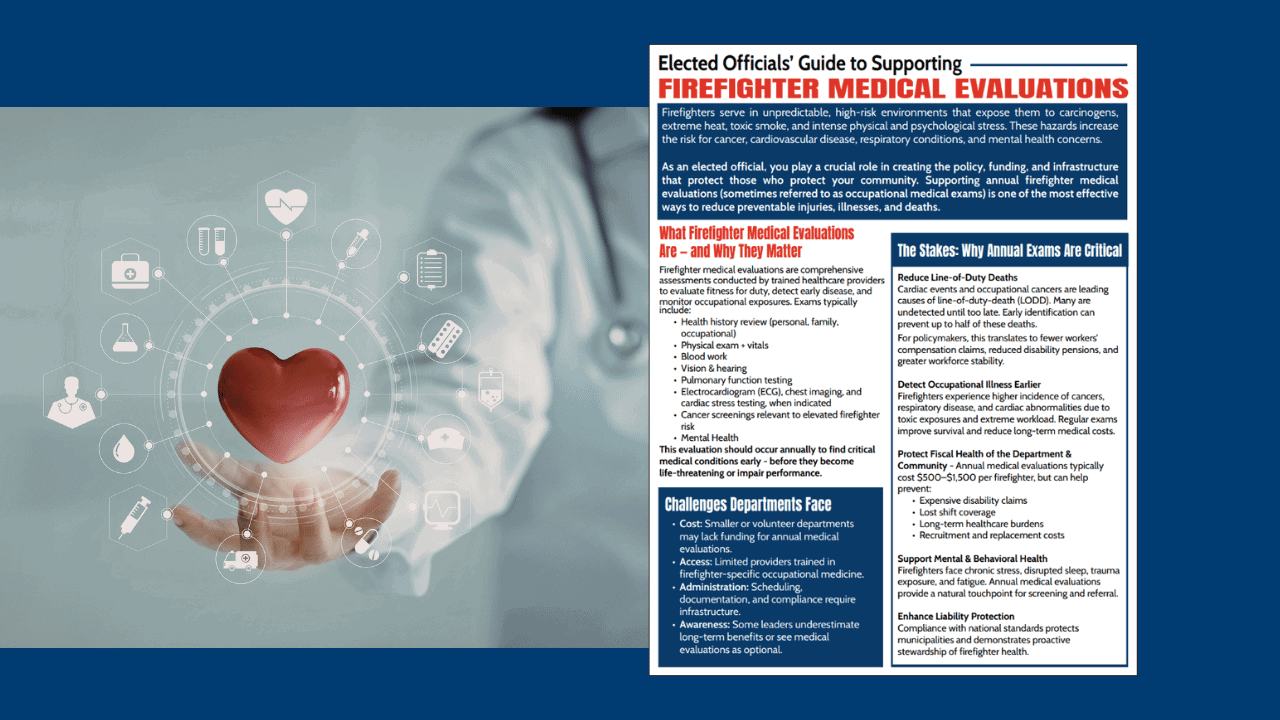
McLean, VA – The International Association of Fire Chiefs (IAFC) Safety, Health and Survival (SHS) Section announced the release of the Elected Officials Guide to Firefighter Physicals, a new resource designed to help local, state, and federal elected leaders understand the importance of comprehensive medical evaluations for firefighters, and their role in ensuring firefighter health and wellness.
Firefighting is one of the most physically demanding and hazardous professions, with firefighters routinely exposed to extreme heat, toxic environments, and intense physical stress. Sudden cardiac events remain the leading cause of line-of-duty deaths in the fire service. Regular, standardized firefighter physicals are a proven tool to identify health risks early, reduce preventable injuries and fatalities, and ensure firefighters are medically fit to protect their communities.
The guide explains:
- Why firefighter physicals are essential for operational readiness and public safety
- The components of a comprehensive, evidence-based firefighter medical evaluation
- How physicals help reduce long-term healthcare costs and line-of-duty deaths
- The role elected officials play in supporting firefighter health through policy and funding decisions
This guide was developed to give elected officials clear, practical information about why firefighter physicals are not optional. They are a lifesaving investment. When firefighters are healthy and fit for duty, entire communities benefit through safer, more reliable emergency response.
The quote above is from Ian Emmons, chair of the IAFC’s Safety, Health and Survival Section.
The guide also addresses common misconceptions about firefighter physicals, including cost concerns, and outlines how proactive health programs can lead to long-term savings by reducing workers’ compensation claims, disability retirements, and preventable medical emergencies.
By releasing this guide, the IAFC Safety, Health and Survival Section aims to strengthen collaboration between fire service leaders and policymakers, ensuring that decisions affecting firefighter health are informed by data, best practices, and the realities of the job.
The IAFC Safety, Health and Survival Section developed this guide in collaboration with key partners across the fire service and research community, including the International Association of Fire Fighters (IAFF), Science to the Station, the Congressional Fire Services Institute (CFSI), the Fire Department Safety Officers Association (FDSOA), the National Fallen Firefighters Foundation (NFFF), the Institution of Fire Engineers (IFE), the First Responder Center for Excellence (FRCE), the National Volunteer Fire Council (NVFC), and the National Development and Research Institutes (NDRI). Their collective expertise helped ensure this resource reflects the latest science, best practices, and real-world needs of the fire service.
About the International Association of Fire Chiefs and Safety, Health & Survival Section
The International Association of Fire Chiefs (IAFC) represents the leadership of firefighters and emergency responders worldwide. The IAFC Safety, Health and Survival Section is dedicated to reducing line-of-duty deaths and injuries through advocacy, education, and evidence-based safety initiatives that protect those who protect others.
About the partner organizations
- International Association of Fire Fighters (IAFF) represents more than 360,000 professional fire fighters and emergency medical personnel across the United States and Canada, advancing the safety, health, and working conditions of its members.
- Science to the Station translates the latest research into practical strategies that improve firefighter health, safety, and performance.
- Congressional Fire Services Institute (CFSI) is a nonpartisan, nonprofit organization that educates members of Congress about the needs of the fire and emergency services.
- Fire Department Safety Officers Association (FDSOA) provides training, resources, and advocacy to support safety officers and promote a culture of safety.
- National Fallen Firefighters Foundation (NFFF) honors America’s fallen fire heroes, supports their families, and works to reduce firefighter deaths and injuries.
- Institution of Fire Engineers (IFE) promotes excellence in fire engineering, fire safety, and emergency response worldwide.
- First Responder Center for Excellence (FRCE) supports research, education, and best practices to reduce occupational illness and injury among first responders.
- National Volunteer Fire Council (NVFC) represents the interests of volunteer fire, EMS, and rescue services through advocacy, training, and resources.
- National Development and Research Institutes (NDRI) conducts research and develops evidence-based solutions on public health and safety issues affecting first responders.